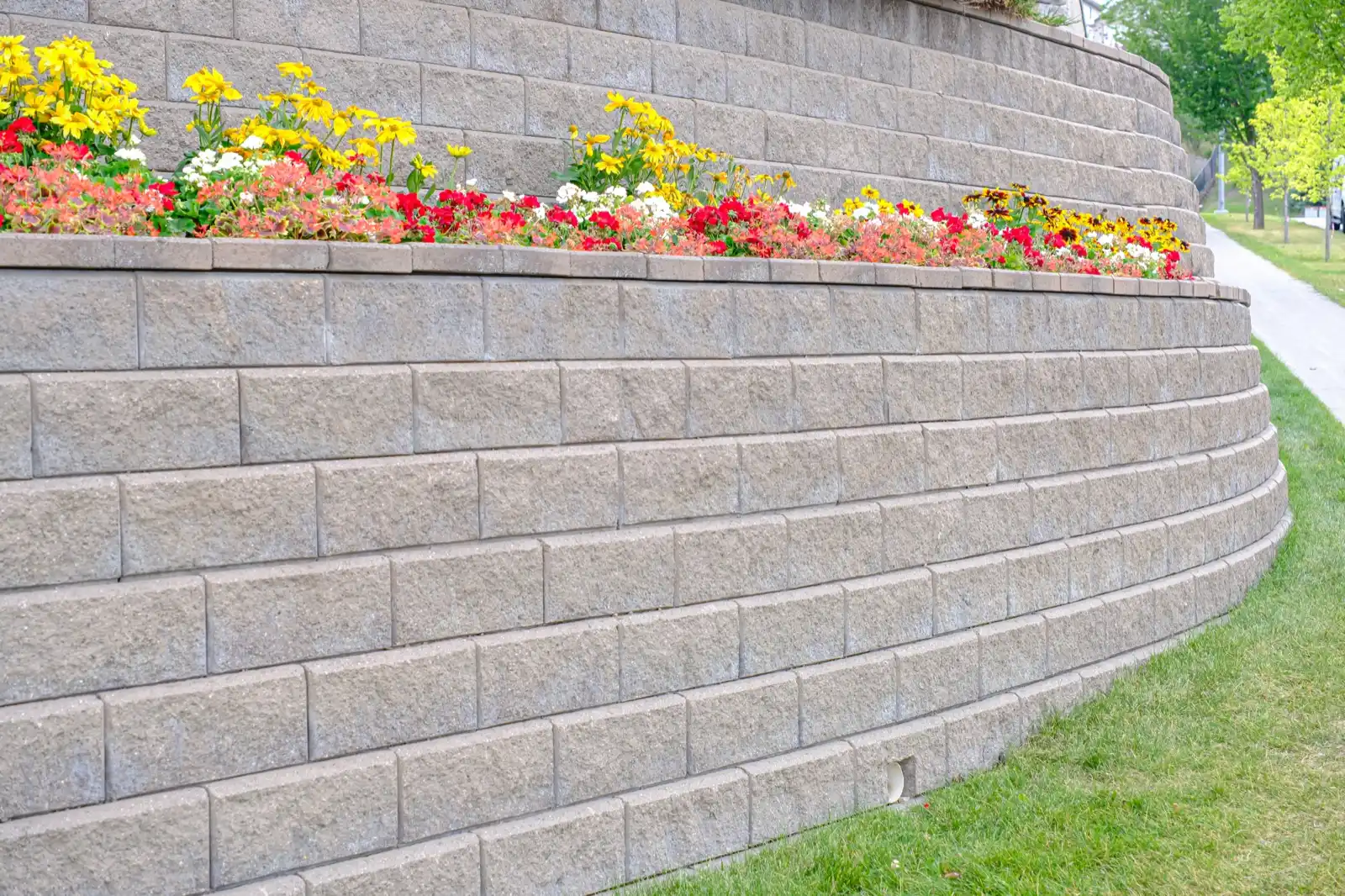
Meridian Retaining Walls helps Meridian homeowners with retaining wall drainage as a job of its own: adding a drain behind a wall that’s already standing, or fixing one that has stopped working. National cost guides put a drainage retrofit at $60 to $70 per linear foot. Here’s why it matters in this valley: canal seepage is the largest source of groundwater recharge in the Treasure Valley, according to the state’s water budget.
Give us a call if your wall is showing water, staining or soil washing out at its foot, or if two quotes don’t agree on pipe and gravel. Planning a new wall? Drainage for that is covered too. It helps to know where the water shows up and the wall’s length and height, and to have photos taken after irrigation or rain.
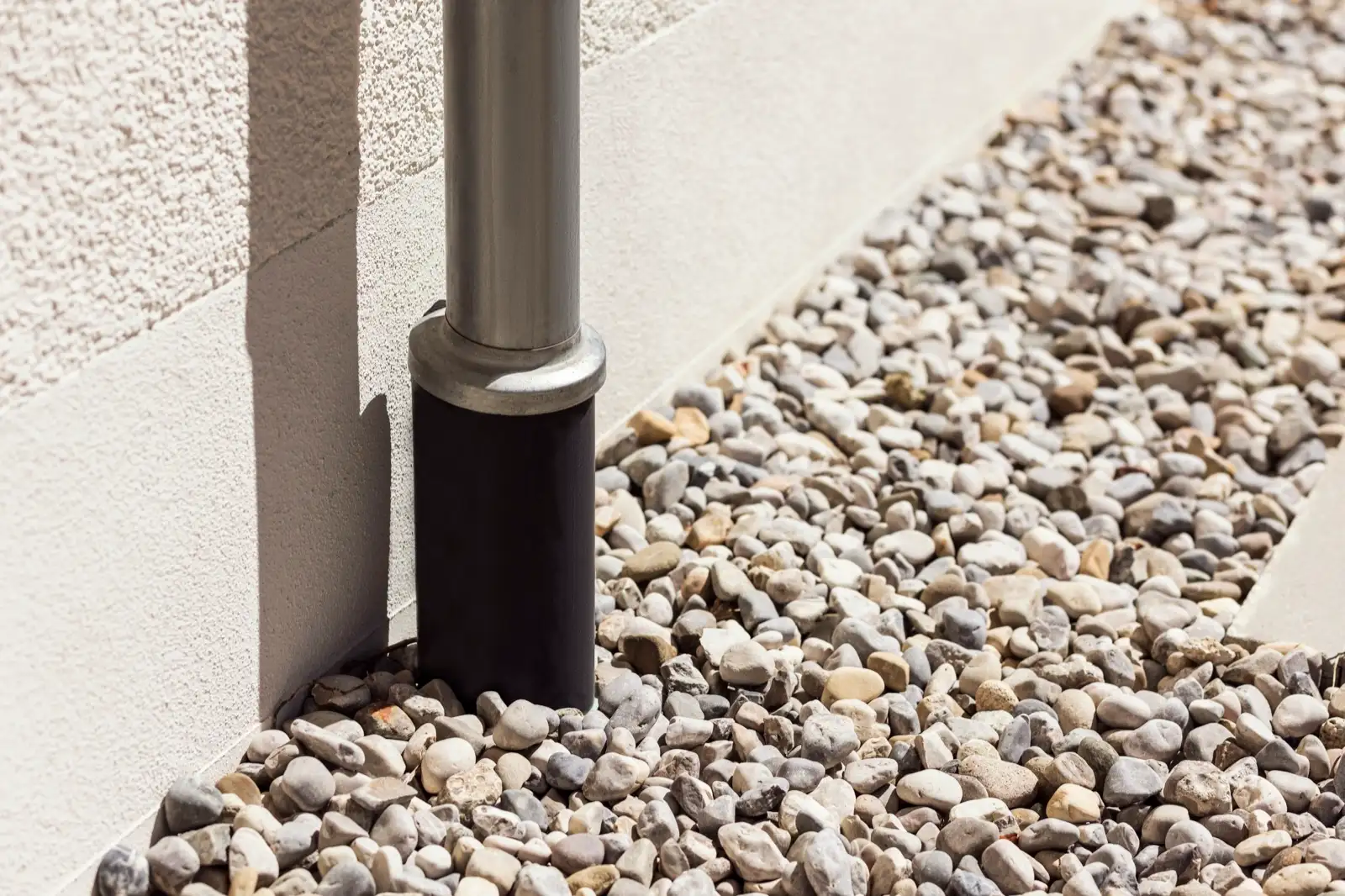
- Drain rock
- At least 12 in behind the wall
- Drain pipe
- Over 4 ft, or in silty or clay soil
- Pipe vents on tiered walls
- At least every 50 ft
- Typical retrofit
- $60 to $70 per linear foot
Retaining wall drainage services in Meridian
Drain added behind an existing retaining wall
For a standing wall with no pipe, or with one that has clogged. The work is priced per foot of wall, and 40 feet of retrofit works out to $2,400 to $2,800 at the typical national rate.
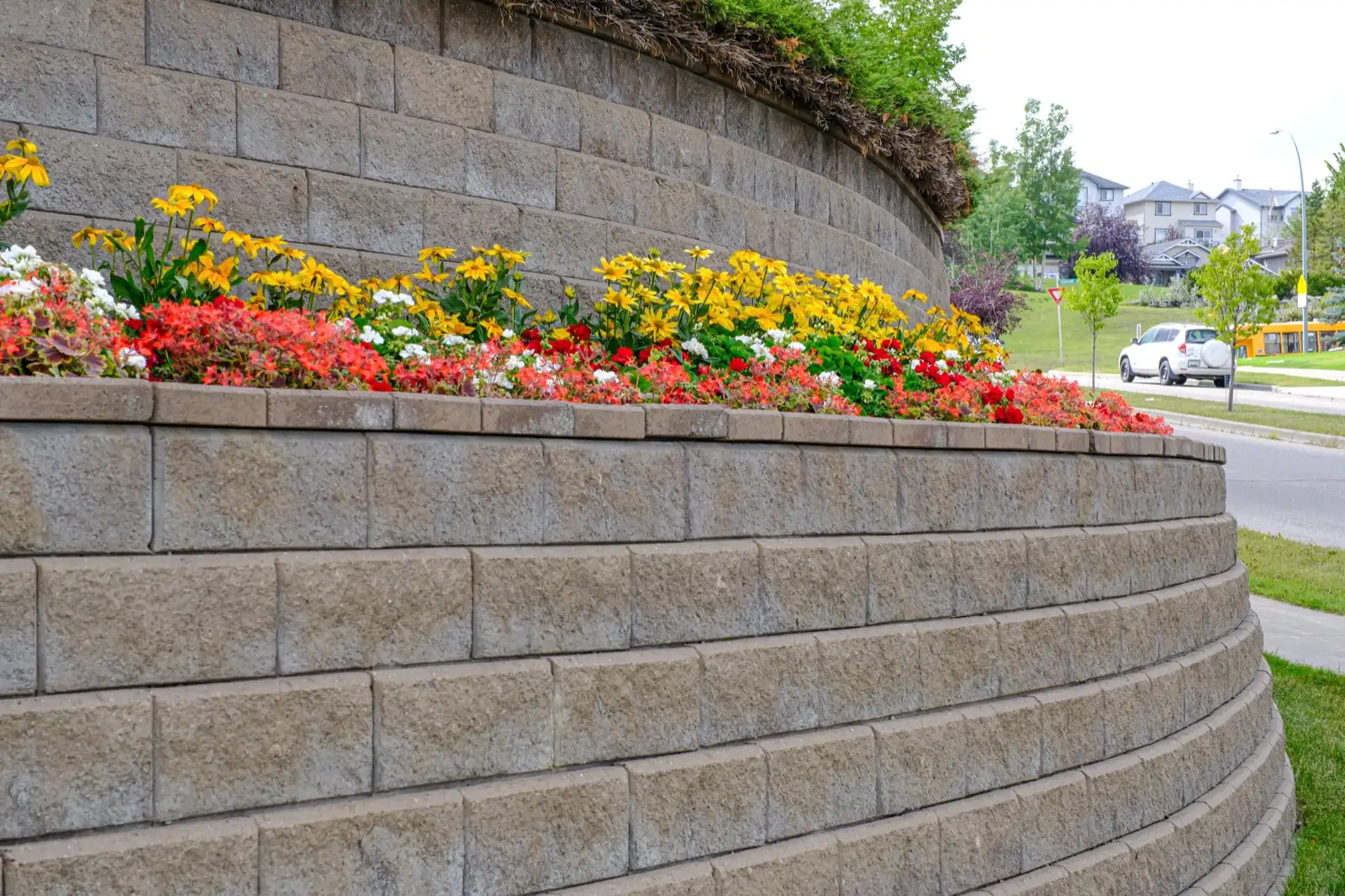
Drainage behind a new block wall
Drain rock, pipe and outlets are planned along with the wall. Block manufacturer guidance calls for a drain pipe behind walls over 4 feet and behind any wall built in silty or clay soil. The block retaining walls page has the wall itself.
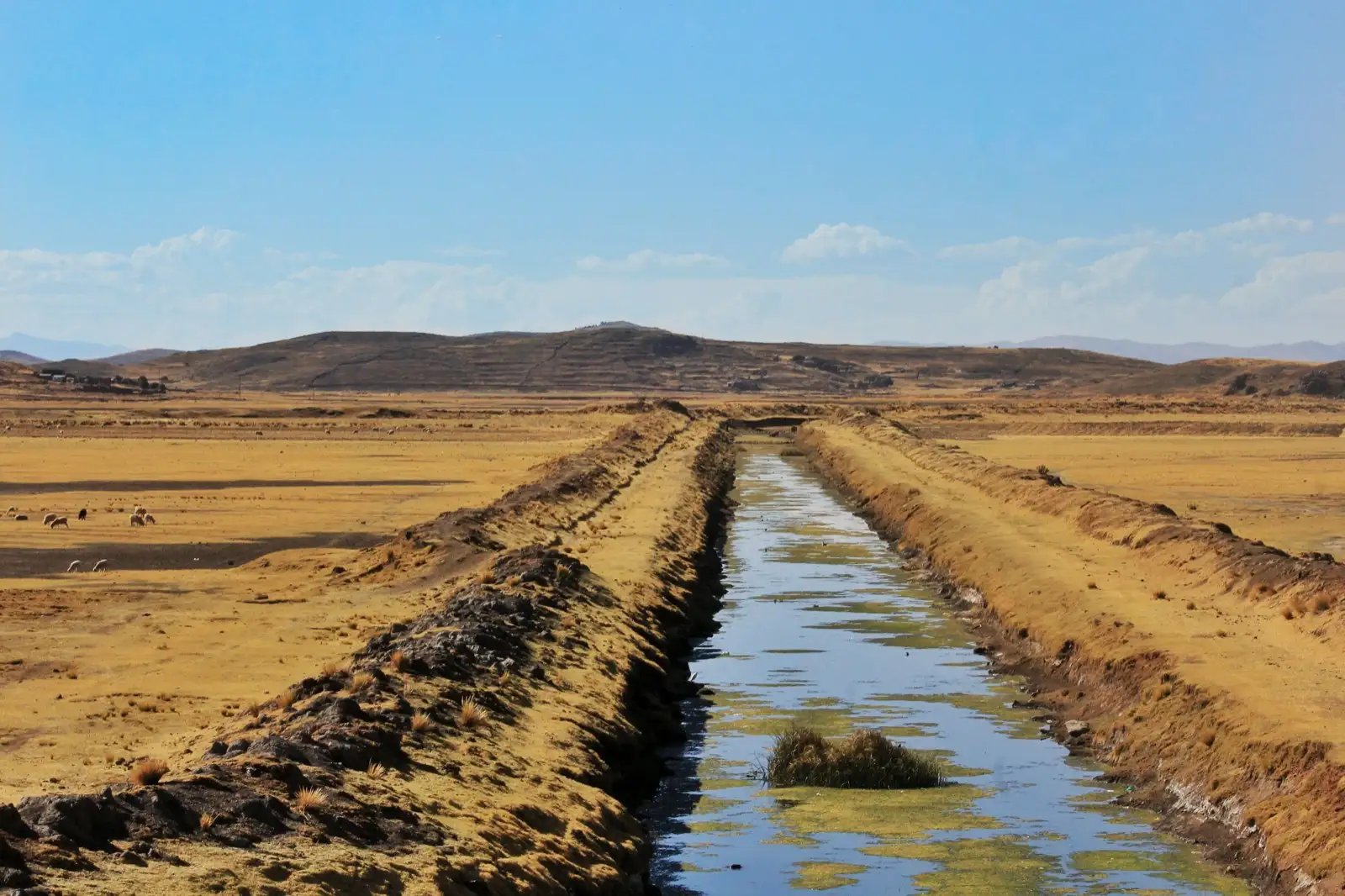
Wet walls near canals and on river-bottom ground
On a lot beside a canal or on floodplain soil, the first job is figuring out where the water’s coming from. Moulton soil on the river floodplain has a water table commonly 18 to 26 inches below the surface. Retaining walls near canals covers the irrigation district’s side of it.
Let's talk about your retaining wall drainage
Call with the length and height and what sits above the wall.
What does adding drainage to an existing retaining wall cost?
Drainage added to a standing wall is priced by the foot of wall. The figures below are typical national ranges.
| Line | Typical price |
|---|---|
| Drainage retrofit | $60 to $70 per linear foot |
| Drainage retrofit along 40 ft of existing wall | $2,400 to $2,800 (40 ft x $60 and 40 ft x $70) |
| Waterproofing | $2 to $10 per square foot |
Typical US drainage rates from January 2025, waterproofing from October 2026. They change with the lot.
Measure your wall before you call. The retrofit rate is per foot.
Bear in mind these are general figures, not a quote or an estimate for your wall. A drainage job’s price moves with the wall’s length and height, the digging needed to reach the back of it, the soil, machine access and where the outlets can run. Call us, and we’ll help you find a contractor who can price the drain on yours. If the wall has moved as well as held water, the rebuild figures sit on the retaining wall repair page, and whole walls are priced by type and size under retaining wall cost.
Call (208) 445-1999 to talk it throughor request a quote online
How long does a retaining wall drainage retrofit take?
Two things set the schedule. The first is the utility locate, since a drain goes in by digging at the back of the wall. Idaho’s dig law says the one-number locating service needs notice at least 2 and not more than 10 business days before that excavation. The same law has the ticket renewed if digging hasn’t started within three weeks of that notice. Closer in, the state’s Damage Prevention Board says excavation needed within 24 inches of a marked line should be done by hand, with extreme care.
The second is the water. For 2026 the Nampa & Meridian Irrigation District said Ridenbaugh Canal flows could start as early as April 1. Tell us which months the water shows at your wall.
For the trenching and pipe-laying, ask for the working days in writing.
Why retaining wall drainage matters in the Treasure Valley: canals, soil and shallow water
It doesn’t rain much here. Boise’s airport station averaged 11.70 inches of precipitation a year.
The canals put more water in the ground. The state’s water budget ranks canal seepage first for groundwater recharge and flood-irrigation seepage next, and the two feed a shallow aquifer with local perched zones. So note if your wall is wetter in irrigation season or after rain.
On the river floodplain the water sits close to the surface. Notus soil, on the channeled floodplain, is saturated within 20 inches for part of the year.
How much does water matter to a wall? In a database of 400 failed geosynthetic-reinforced walls, 63% of the failures were water-related.
Good to know Ask when a groundwater reading was taken. Caldwell’s stormwater manual presumes readings taken between November 1 and March 30 are seasonally low, and requires 2 feet to be added to the highest measured level. That’s a stormwater design rule, not a wall rule; the Caldwell retaining walls page has the city’s other local rules. Meridian’s design standards want the soils report for a development grading plan to show seasonal high groundwater elevations.
Still weighing it up?
Permits, engineering, drainage or price: ask before you commit.
What drainage does a retaining wall need behind it?
Most of it is buried by the time the wall is finished, so check these lines against the quote while they can still be changed.
| Wall type | What’s called for | Source |
|---|---|---|
| Segmental block | At least 12 in of gravel fill behind the units | Block industry association. |
| Block over 4 ft, or in silty or clay soil | A drain pipe | Block manufacturer guidance. |
| Block (one manufacturer’s installation guide) | Filter fabric lining the excavation; ground graded 2 to 5 percent away from the wall | Manufacturer’s installation guide. |
| Tiered or terraced walls | A drain pipe, vented at least every 50 ft | Block manufacturer guidance. |
| Rockery or boulder wall | A drain rock zone at least 12 in wide | Federal rockery guidance. |
| Gabion baskets | Fabric behind; normally no separate drainage layer | A gabion design article. |
| Reinforced block (CMU) | Waterproof material on the back of the wall; perforated pipe, holes down, in coarse aggregate | An out-of-state city’s standard plan. |
That installation guide is blunt about the gravel: “Without this layer the wall will fail.”
Where does retaining wall drainage go?
Out, at a place somebody can find again. Spacing goes by wall type, and there’s one firm limit.
- Block wall drain outlets The industry association’s design note puts drain outlets no more than 50 feet apart. A block manufacturer’s drain guide runs them to daylight or to a lower point on the site, and wants each outlet marked and protected.
- Rockery and boulder wall outlets Federal rockery guidance allows more room: drain outlets no more than 100 feet apart.
- Daylight at an approved location One out-of-state city’s standard plan runs the pipe to daylight at an approved location. Its other option, leaving out every third head joint on the first course, isn’t allowed where the water would run onto a walking surface or adjacent property.
Signs of a retaining wall drainage problem
You can’t see a buried drain from the lawn, but you can see these.
- White streaks that arrive late or keep coming back Even bloom on a new block wall weathers away and doesn’t affect structural performance. The block association’s flag is late or recurring streaks, which mean water is entering and needs correcting.
- A bulge, or soil washing out below the wall Bulging and erosion below the wall are both on an engineering firm’s list of warning signs, alongside cracking, leaning and separated joints. With a bulge showing, drainage may be one line on a larger retaining wall repair.
- Fine soil where the drain rock should be A 12 meter segmental wall collapsed in a rainstorm because its backfill held over 38% fines and its design assumed no water pressure. Its global safety factor fell from above 1.2 dry to 0.56 saturated.
Seeing one of these? Photograph it on a wet day and call, or attach the photos to the form.
Retaining wall drainage questions
Do retaining walls need drainage?
Yes. For block walls, the industry association calls for at least 12 inches of gravel fill behind the units, and a pipe is added once the wall passes 4 feet, or at any height in silty or clay soil, per block manufacturer guidance.
Does a small retaining wall need drainage?
It can. The pipe rule kicks in over 4 feet, but in silty or clay soil manufacturer guidance calls for a pipe behind any wall, whatever the height. That can matter here. Purdam soil, extensive in southwest Idaho, has a subsoil of 24 to 32 percent clay.
What does retaining wall drainage repair cost?
A drainage retrofit runs $60 to $70 per linear foot by typical 2025 national figures. That’s a general range that changes, not a quote. Your own wall’s price comes from the contractor who looks at it.
Why is my retaining wall not draining?
There’s no telling from a web page, but two clues help when you describe yours. One manufacturer’s installation guide lines the excavation with filter fabric and grades the ground 2 to 5 percent away from the wall, so ask whether either was done. And white streaks that show up late or return mean water is getting in somewhere.
Do I need gravel behind my retaining wall, and what size?
Plan on at least 12 inches. That’s the minimum for gravel fill behind block and for the drain rock zone behind a rockery. Gabions are the exception: rock-filled baskets with fabric behind normally need no separate drainage layer. For stone size, ask for the quote to name the rock.
Don't see your question? Call (208) 445-1999.
Sources and review date
Reviewed October 2026. Sources: block industry association and block manufacturer guides; federal rockery guidance; an out-of-state city's standard wall plan and a gabion design article; engineering studies of wall failures; federal soil surveys; Idaho's Treasure Valley water budget, dig law and Damage Prevention Board; Nampa & Meridian Irrigation District; City of Meridian design standards; Caldwell stormwater manual; Boise climate records; national cost guides (January 2025 and October 2026).