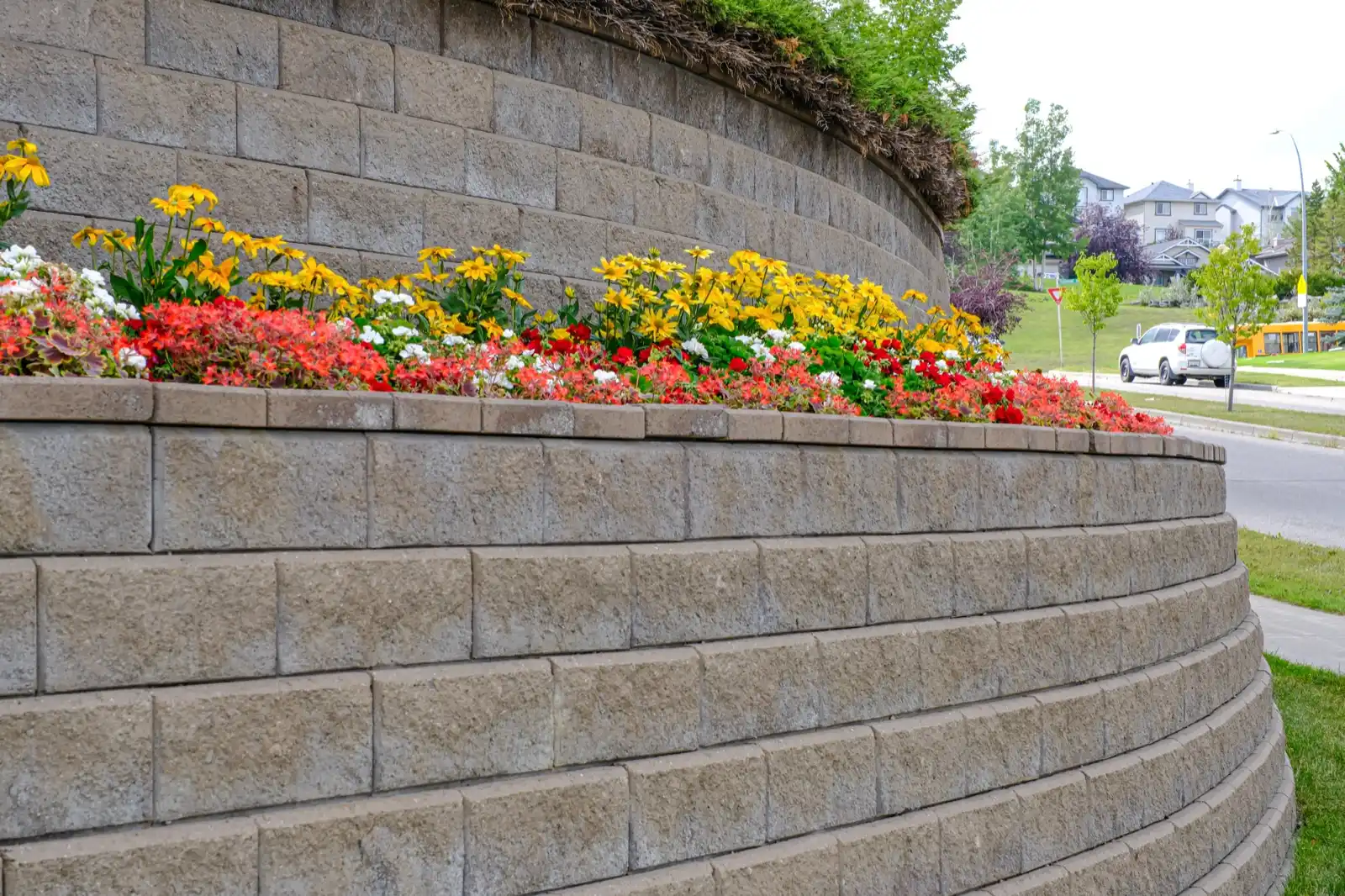
Meridian Retaining Walls covers block retaining wall installation across Meridian, from a low patio edge to a geogrid wall with a stamped plan. Interlocking block typically runs $15 to $35 per square foot of wall face. Without reinforcement, the block industry association puts a block wall at typically 3 to 4 feet, less with poor soil or a load above.
The block is sold close by. One block system lists dealers at 1300 E. Franklin Road and 4975 S Meridian Road, both inside the city. The dig-to-cap sequence is on the retaining wall installation page.
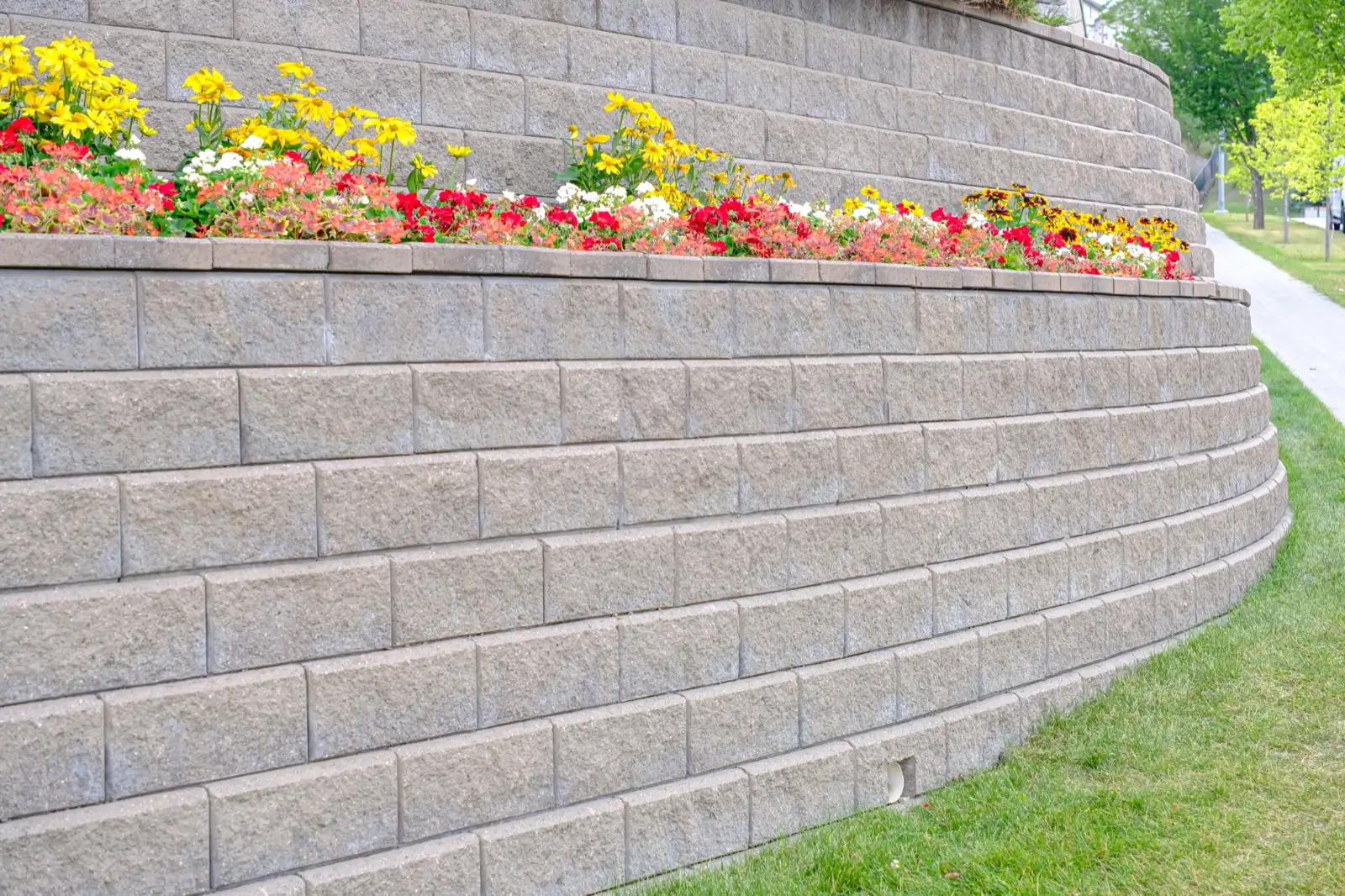
- Typical block price
- $15 to $35 per sq ft of wall face
- Height without geogrid
- Typically 3 to 4 ft, less with poor soil or a load above
- Leveling pad
- At least 6 in thick
- Block strength
- 3,000 psi minimum average
Block retaining wall installation services in Meridian
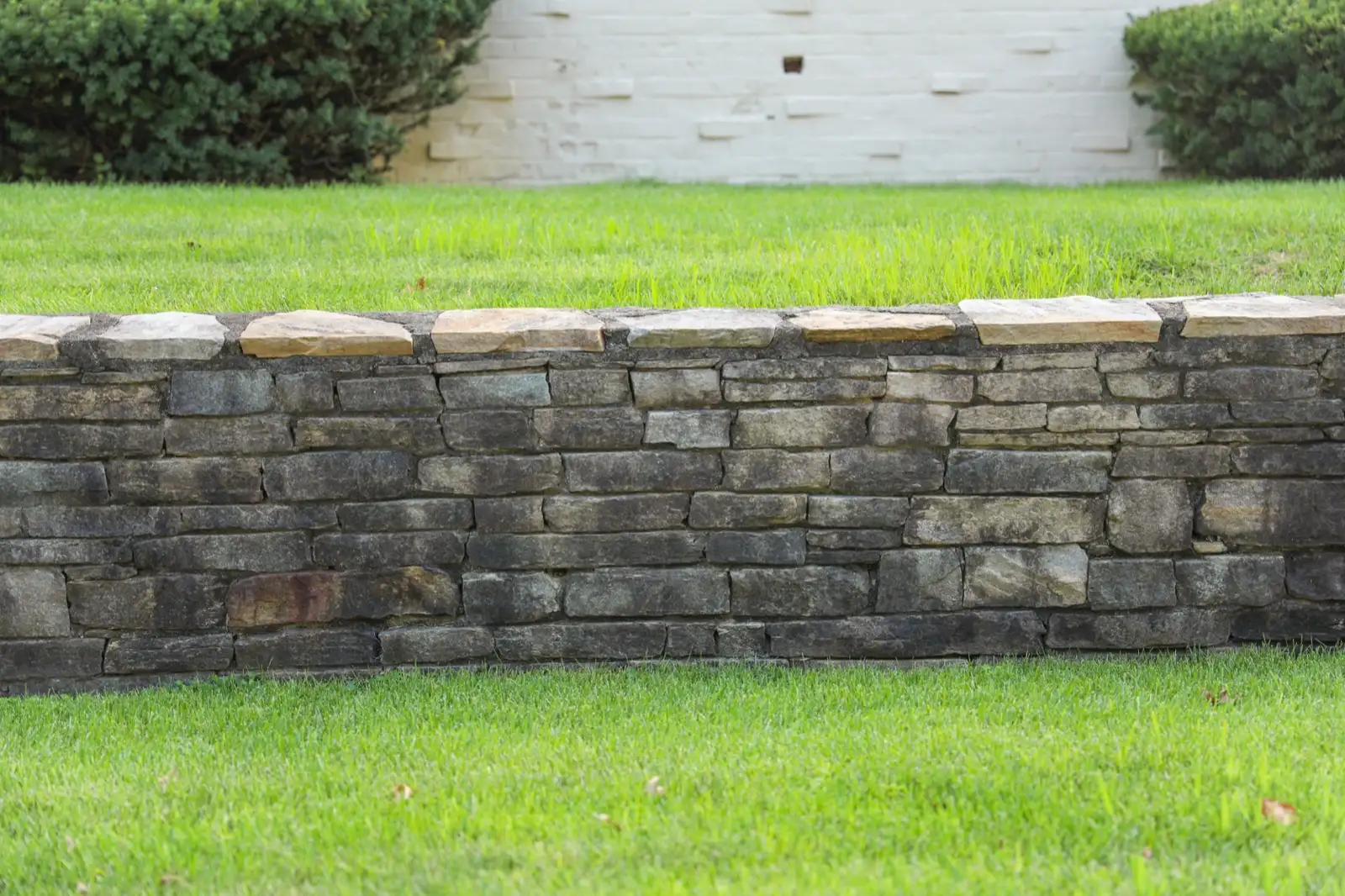
Garden and bed-edge block walls
A low block border along a bed or a lawn. Short walls like these have their own page: small garden retaining walls.
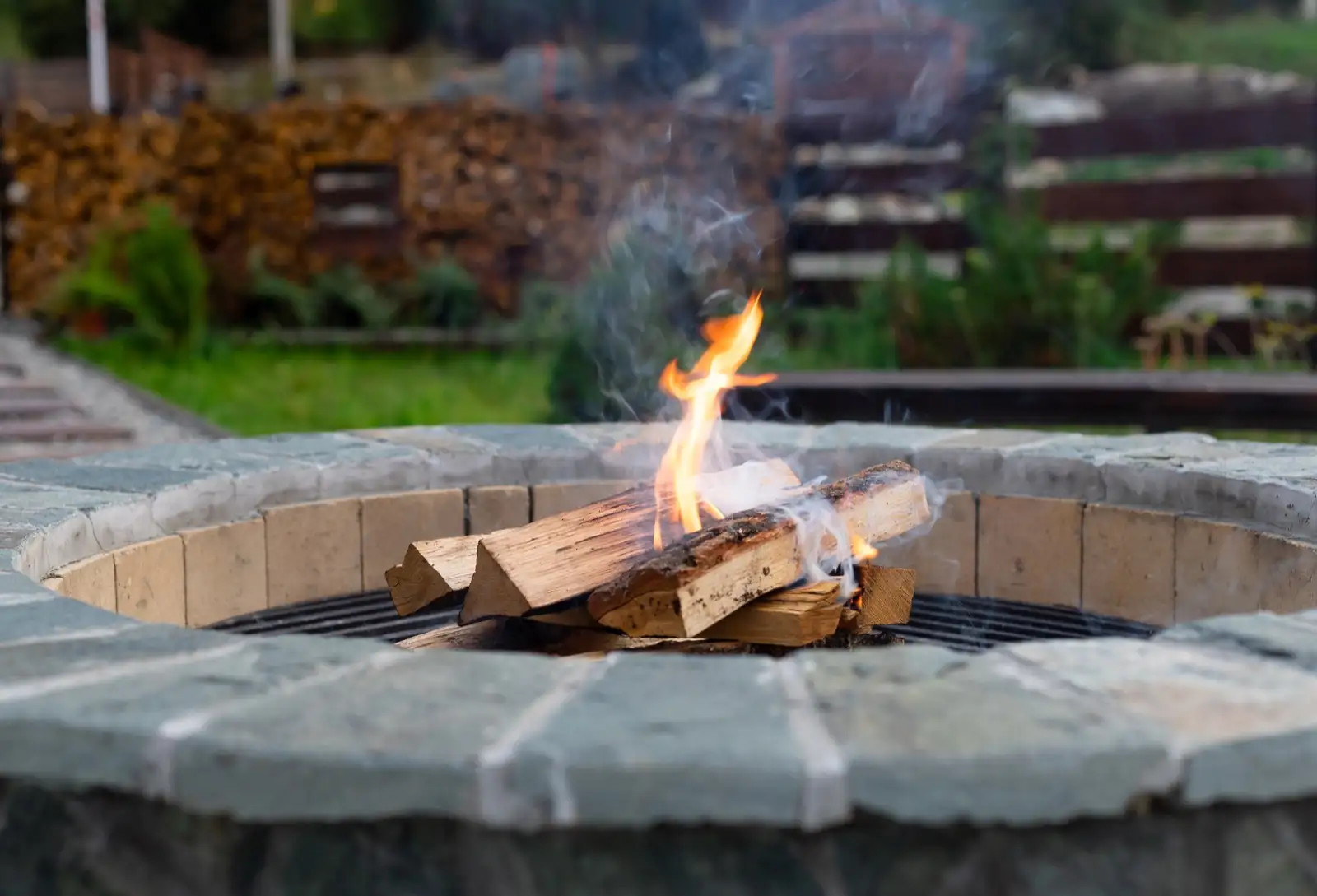
Block walls at a patio or seating edge
A patio cut into a slope, where what sits above the wall matters. Manufacturer guidance calls for at least 6 inches of the block buried, assuming flat ground in front.
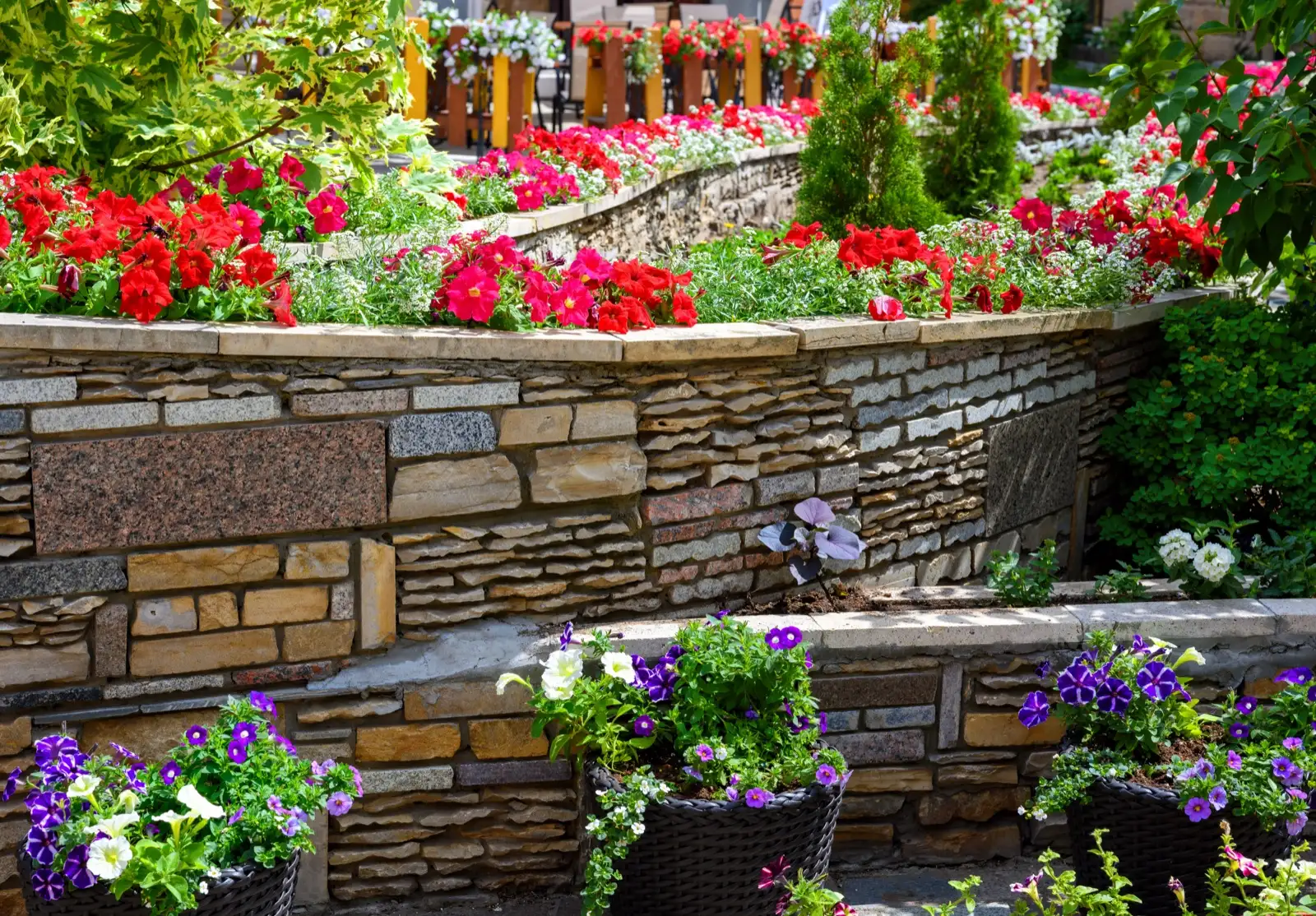
Tiered block retaining walls
A slope taken in two steps, with a level strip between the walls. Two 3 foot tiered retaining walls need more than 6 feet between faces to act as separate walls.
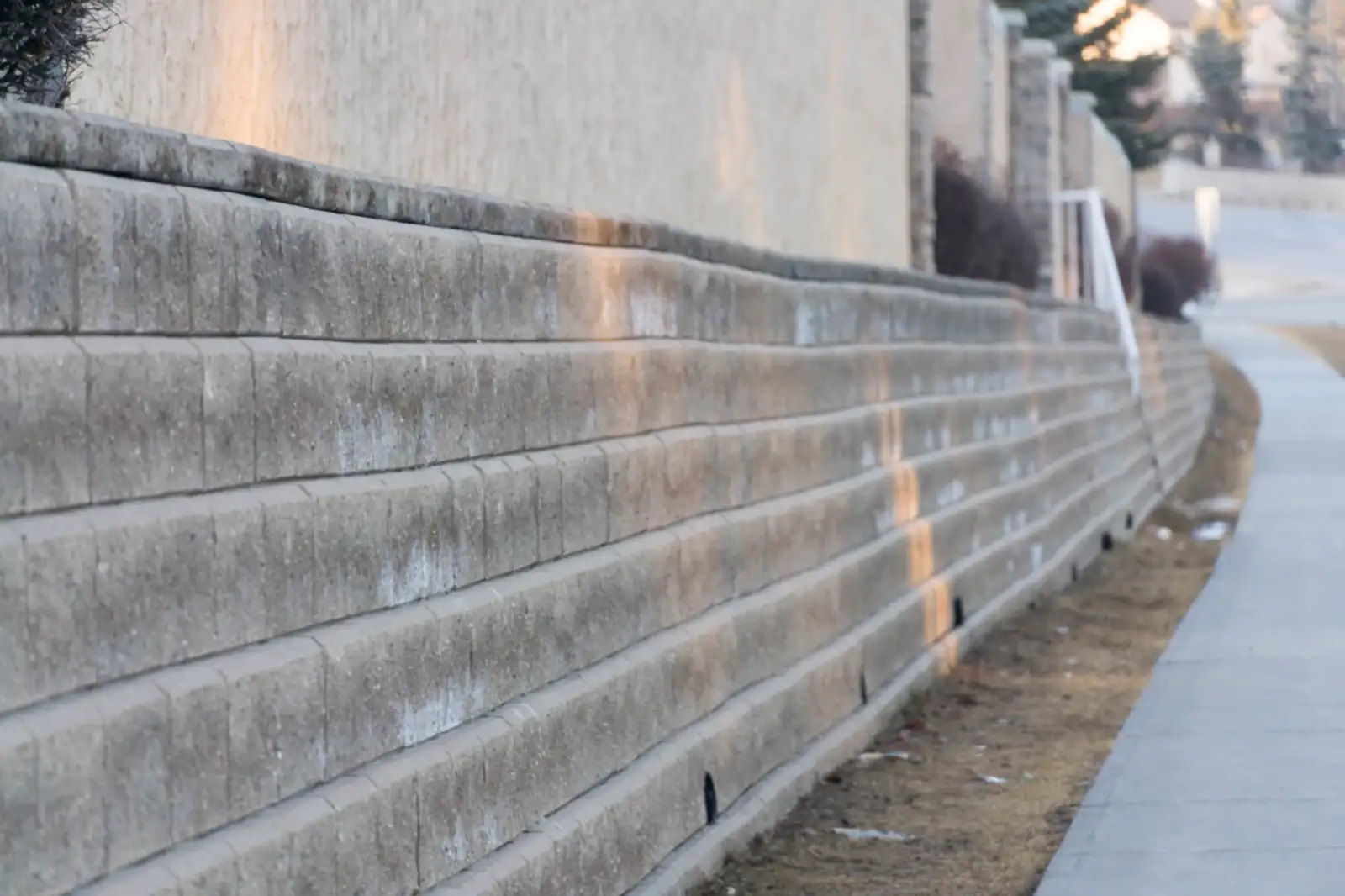
Block retaining walls beside a driveway
A wall with cars above it. Under the code, a wall more than 24 inches tall that carries a load besides soil needs engineered design: driveway retaining walls.
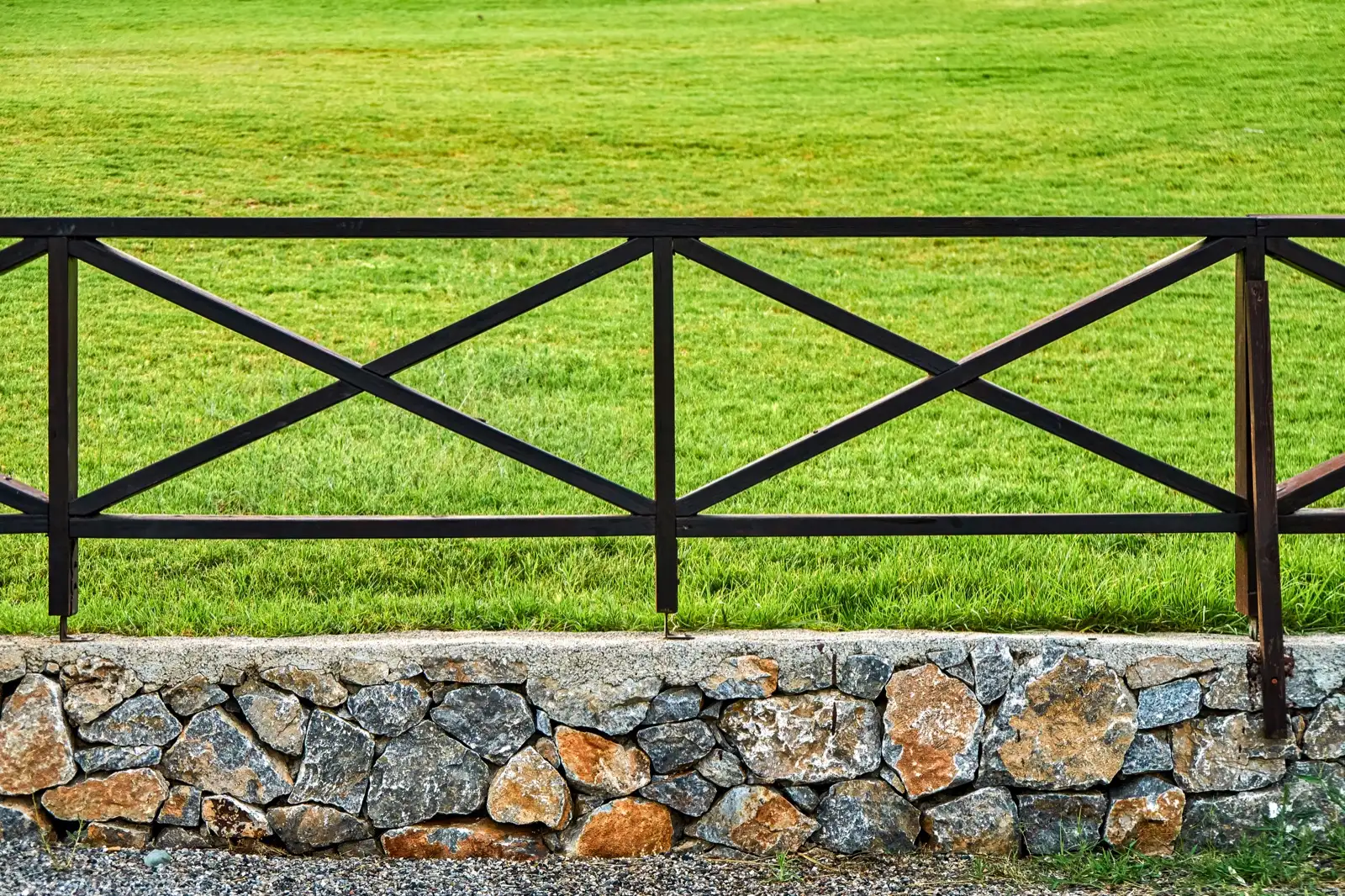
Block walls along a fence or lot line
A wall with a fence planned above it. Manufacturer guidance says a fence within 3 feet of the back of the block usually rules out a gravity wall without geogrid.
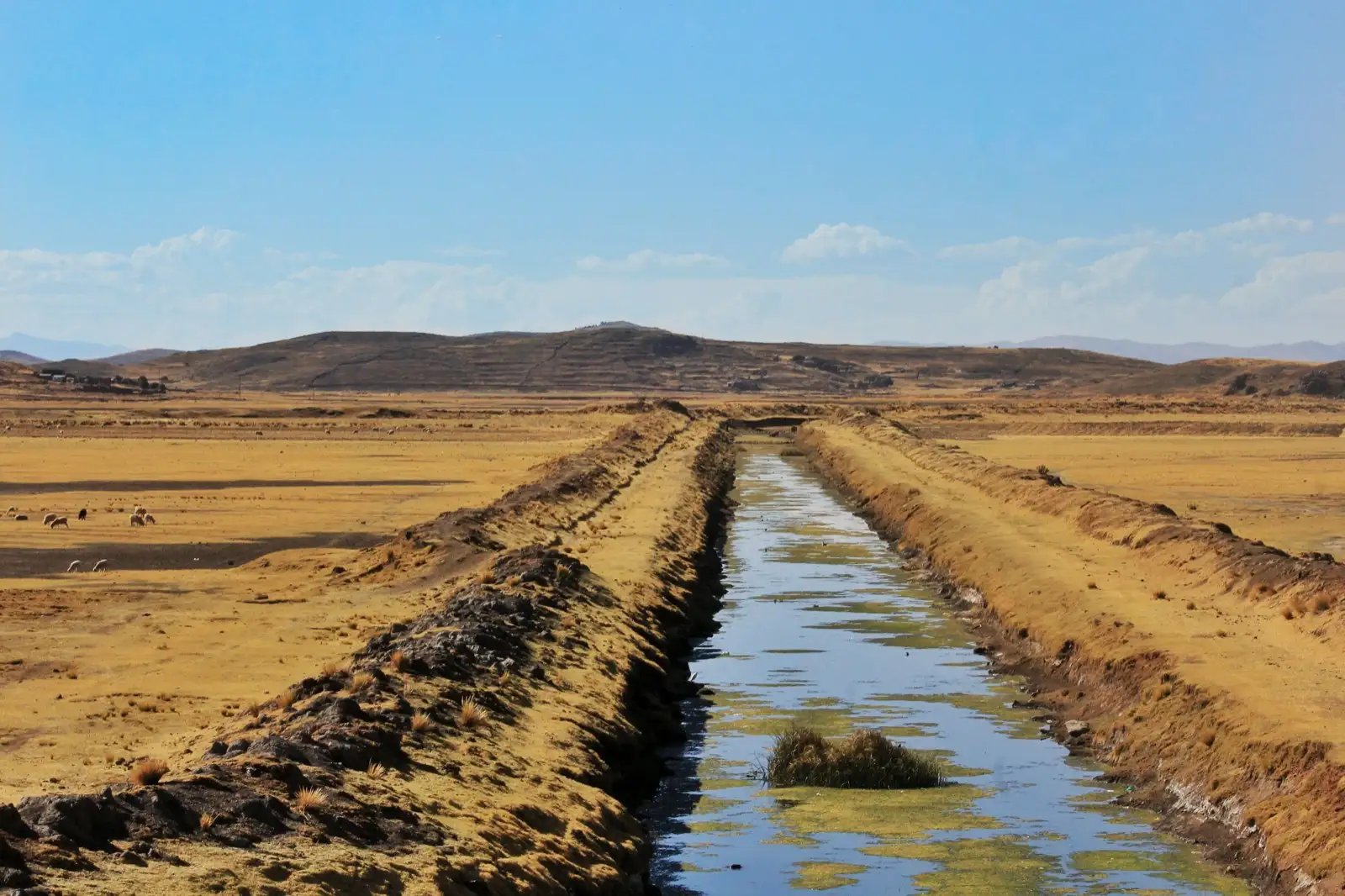
Block walls near a canal or ditch
A yard backing onto district water. The Nampa & Meridian Irrigation District forbids any cut into a canal’s supporting slope: retaining walls near canals.
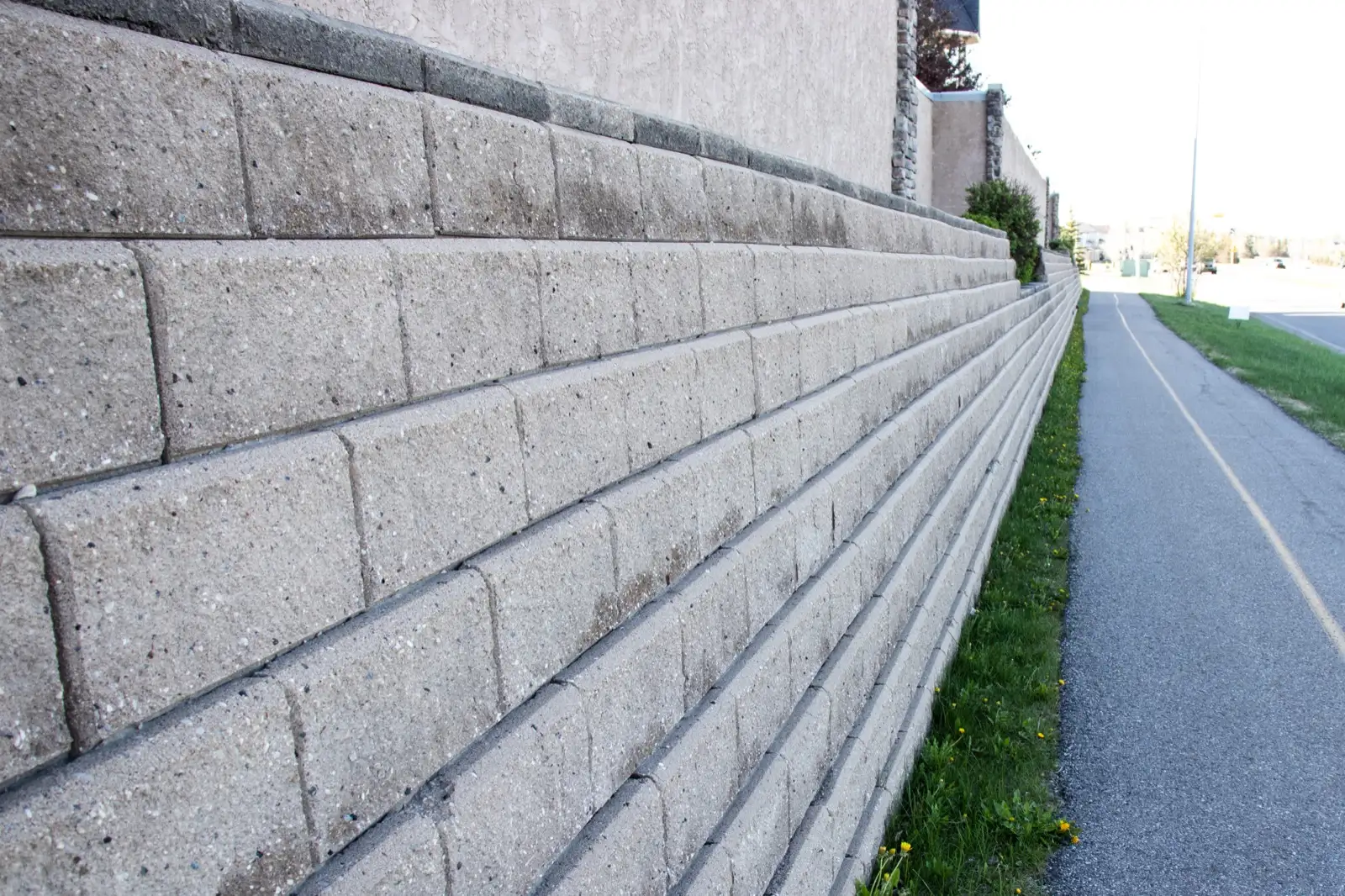
Geogrid block walls over 4 feet
A tall wall with grid, deeper excavation and stamped plans. A 6 foot wall needs grid reaching at least 4 feet back. See engineered retaining walls.
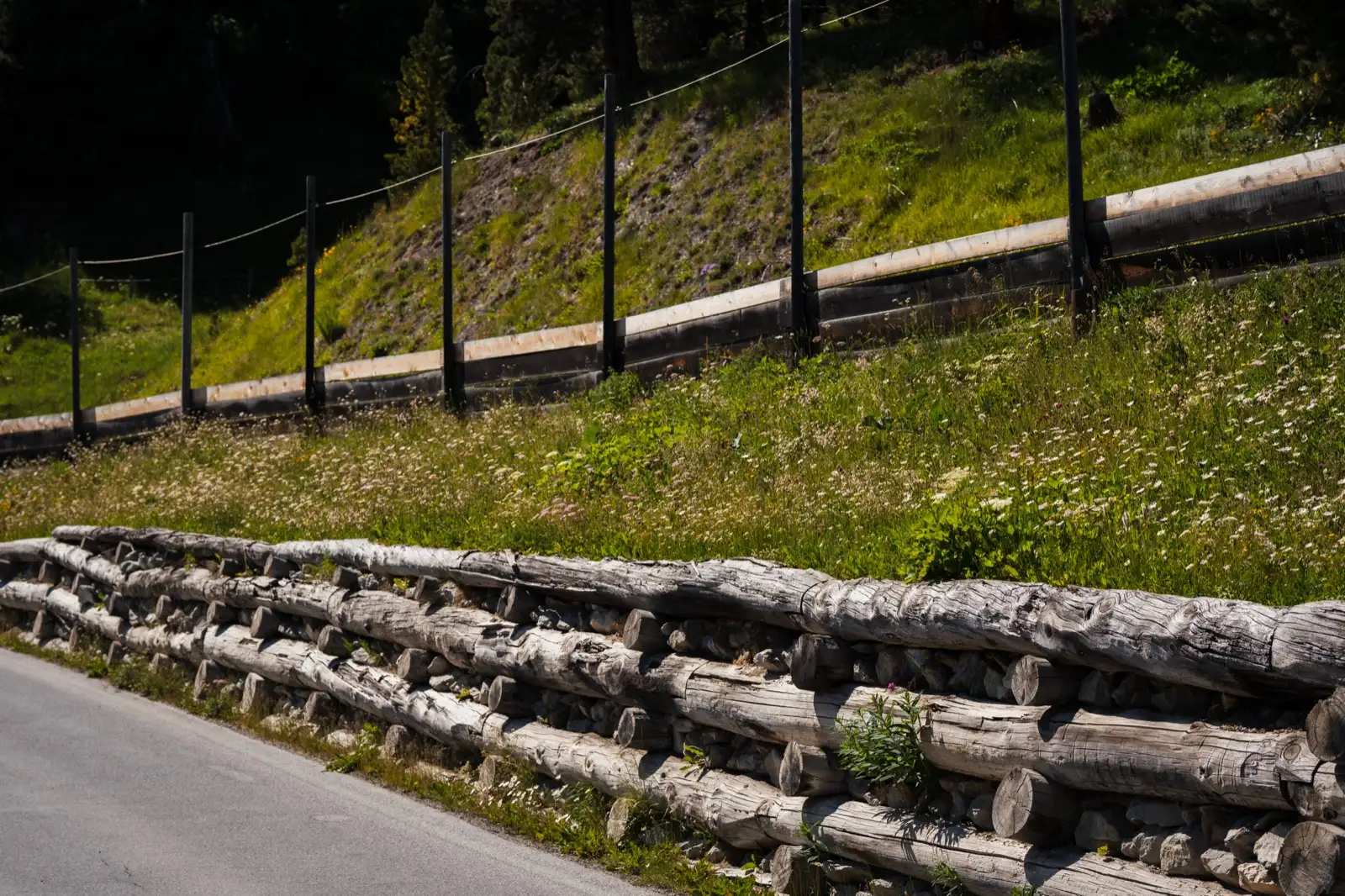
Block wall replacing an old timber wall
A rotting tie wall taken out and replaced in block. One large-block maker claims 75 years or more from a properly installed wall, the maker’s own claim. See railroad tie wall replacement.
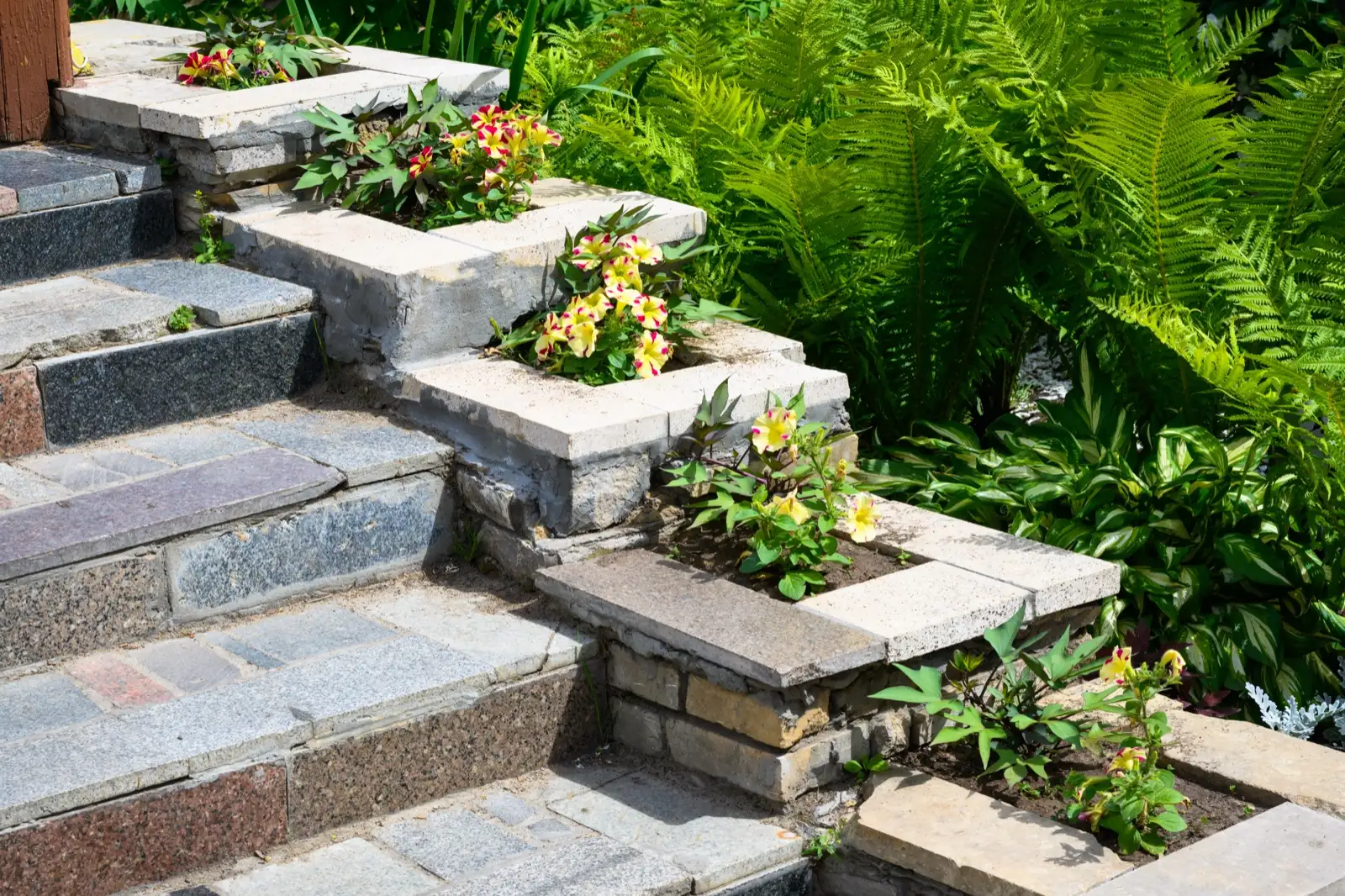
Block retaining walls on a sloped backyard
A yard that falls along the wall line, so the wall steps up. Per manufacturer guidance, the base course starts at the lowest point and each step-up block must be completely buried.
Get your block retaining wall on the calendar
Have the measurements handy and give us a call.
What does a block retaining wall cost in Meridian?
A block wall’s price comes down to wall face area, height and site conditions. Here’s one wall worked through typical national price ranges per square foot of wall face.
| 40 ft long, 3 ft high (120 sq ft of face) | Works out to |
|---|---|
| Segmental block wall | $1,800 to $4,200. |
| Same wall in poured concrete | $2,400 to $4,800. |
| Same wall in timber | $1,560 to $4,200. |
| Old wall taken out and hauled off first | $3,600 to $6,000. |
Typical US ranges from national cost guides dated January 2025 and October 2026. Prices change and depend on the wall and the site.
Read these as general ranges, not a quote or an estimate for your yard. Height, length, machine access, digging conditions, drainage and taking out an old wall all move the price. Call us with the length and height, and we’ll help you find a contractor to price it.
At typical rates, clearing an old wall that size can cost more than the new block. Height adds up as well: national cost tables put a 6 foot wall at three times a 2 foot wall of the same length.
Every wall type is compared on the retaining wall cost page.
Call (208) 445-1999 to talk it throughor request a quote online
How long does a block retaining wall take?
The lead-up has set dates. Idaho’s dig law requires locate notice at least 2 and not more than 10 business days before excavation. For a block wall over the permit line, Meridian’s residential permit review runs 7 to 10 business days from submittal to approval, as last published by the city in January 2021.
Stacking time is a question for the quote. A small block wall of about 60 to 160 square feet of face commonly takes 2 to 4 days to build. Times vary with the site and the crew, so ask for the days in writing.
How tall can a block retaining wall go before geogrid or a permit?
Typically 3 to 4 feet, says the block industry association, and less in poor soil or with a load above. It measures from the top of the leveling pad, so the buried block counts.
The permit rule starts lower, at the bottom of the footing. Meridian’s handout exempts a wall not over 4 feet from there to the top, unless it supports a surcharge. Over 4 feet, a Residential Miscellaneous (R-MISC) permit is required from Building Services at 33 E. Broadway Avenue.
Past that, geogrid goes in: the plastic mesh that ties the wall back into the soil behind it. The association’s design note sets its length at not less than 0.6 of the wall height, 4 feet minimum. Engineering has its own line in Idaho’s adopted residential code: more than 48 inches of unbalanced fill, or a wall more than 24 inches tall resisting loads besides soil. Near any of those lines? Say so when you call.
Check your wall against the permit ruleor send us the details
Want a second opinion first?
Tell us what you are weighing and we will talk it through.
Block retaining wall base and drainage: what sits under and behind the first course
You won’t see any of this once the wall is done. The numbers come from the block industry association’s and a block manufacturer’s published guidelines.
| Part | Published number |
|---|---|
| Trench | 24 in wide; 6 in deep plus 1 in per foot of wall height. Under 4 ft: 18 in wide; 4 in deep plus the buried block. |
| Leveling pad | At least 6 in of base rock, compacted in at least two passes, about 6 in past the front and back of the wall. |
| Buried block | At least 6 in, with flat ground in front. |
| Gravel fill | At least 12 in behind the units. |
| Drain pipe | Required over 4 ft, and in silty or clay soil. |
| Drain outlets | No more than 50 ft apart. |
Pipes and outlets get a page of their own: retaining wall drainage.
Good to know For geogrid walls, block manufacturer guidance calls for backfill in lifts of 8 inches or less, compacted to 95% Standard Proctor. Heavy equipment stays at least 3 feet from the back of the wall.
What is the best block for a retaining wall?
Pick a block on things you can check, not on looks alone. Ask about three things.
- Its strength and freeze-thaw test Segmental units are specified at a minimum average compressive strength of 3,000 psi and under 1% weight loss after 100 freeze-thaw cycles. Ask for the test sheet.
- The system’s paperwork A current evaluation report for one block system, reissued February 2026, requires structural calculations submitted to the code official for each installation.
- Where it’s sold in the valley One block system lists Basalite and Victory Greens in Meridian, plus Roots Rock & Bark on Highway 44 between Middleton and Star.
What a block retaining wall quote should include
“Block wall, 40 feet” isn’t a quote. Ask for these in writing.
- Pad thickness Inches of compacted base rock. The published minimum is 6.
- Buried block How much of the first course sits below finished grade.
- Gravel depth Its width behind the units, and whether filter fabric lines the excavation.
- Pipe and outlets Whether a drain pipe is included and where it lets water out.
- Grid length, if the wall needs geogrid Number of layers and the length of each.
- Compaction Lift thickness and the target for the backfill.
- Registration number Idaho requires contractor registration for any job over $2,000 in labor and materials, and the number must appear on contracts.
Block retaining wall questions
How much does a block retaining wall cost?
Interlocking block has a typical national range of $15 to $35 per square foot of wall face. A wall 40 feet long and 3 feet high works out to $1,800 to $4,200. Those are general 2026 figures that change over time, not a quote for a Meridian wall.
How long do block retaining walls last?
One large-block maker claims 75 years or more from a properly installed wall, and that’s the maker’s own claim. What the unit specification does test is weathering: under 1% weight loss after 100 freeze-thaw cycles.
Do block retaining walls need drainage?
Yes. The block industry association calls for at least 12 inches of gravel fill behind the units. The pipe is conditional: manufacturer guidance requires it behind walls over 4 feet and behind any wall in silty or clay soil. The Chilcott soil on the valley’s high terraces is 35 to 60 percent clay.
Does a 2 foot block wall need a footing?
Not a concrete one. A block wall that size sits on compacted base rock in a trench, sized by the under-4-ft row in the base table above. Low garden walls are covered in more detail on the small garden retaining walls page.
Don't see your question? Call (208) 445-1999.
Sources and review date
Reviewed October 2026. Sources: Idaho residential code, dig law and contractor registration rules; City of Meridian accessory structure handout and permit timeline sheet; Nampa & Meridian Irrigation District; block industry association technical notes; block manufacturers' installation guides and dealer listings; federal soil survey; contractor-published build times; national cost guides (January 2025 and October 2026).