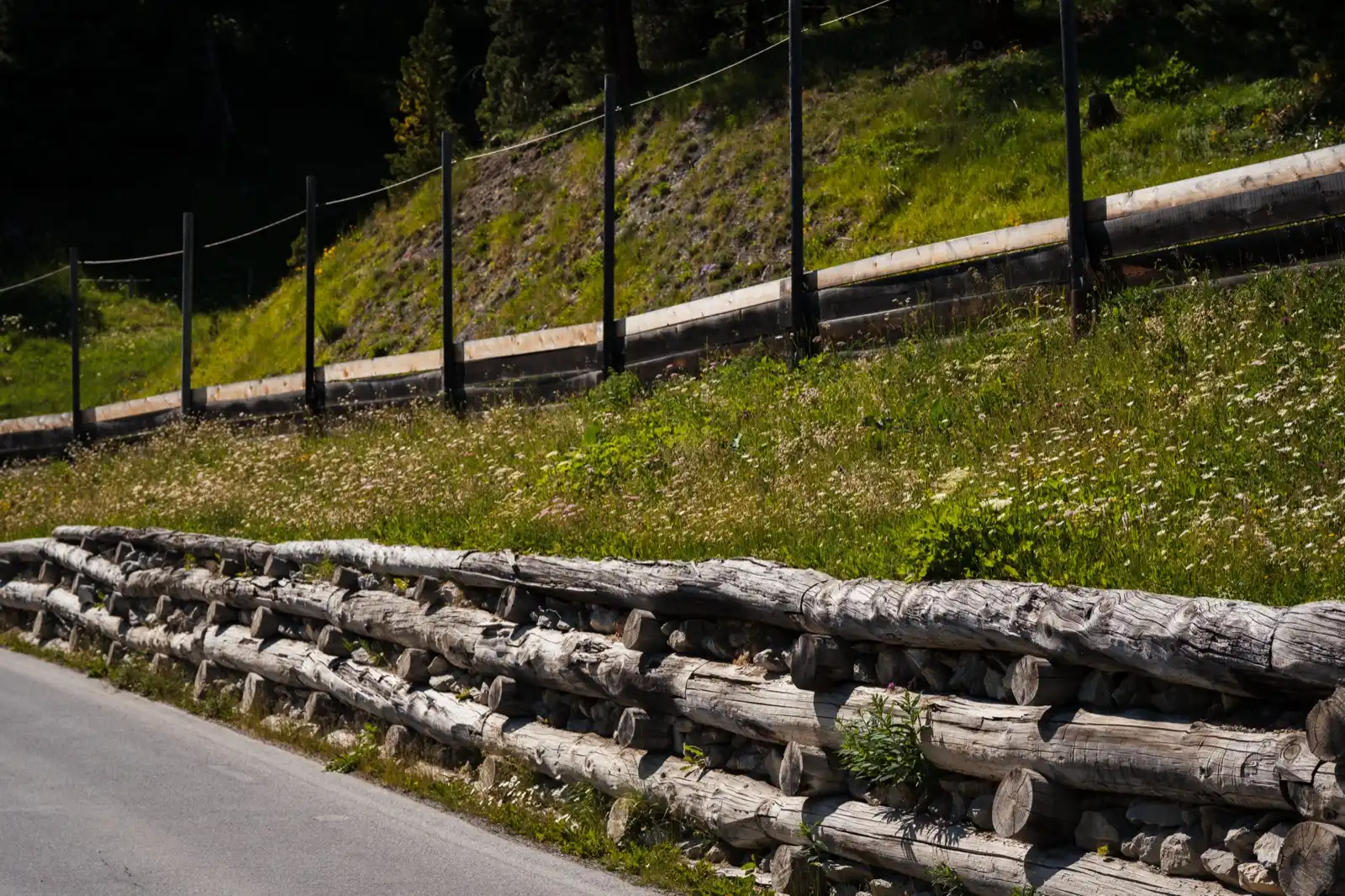
Railroad tie retaining wall replacement in Meridian is a two-part job, and Meridian Retaining Walls helps homeowners with both: getting the old ties out and a new wall in. National cost guides put the tear-out at $10 to $20 per square foot of wall face, plus $20 to $30 for hauling and disposal. On a wall 40 feet by 3 feet, that’s $3,600 to $6,000.
A tie wall that’s rotting at the base or bowing out of line can be replaced in block, boulder, poured concrete or new timber. Expect two prices: the tear-out, then the new wall. Call us with the wall’s length and height, and have a few photos of the worst ties handy.
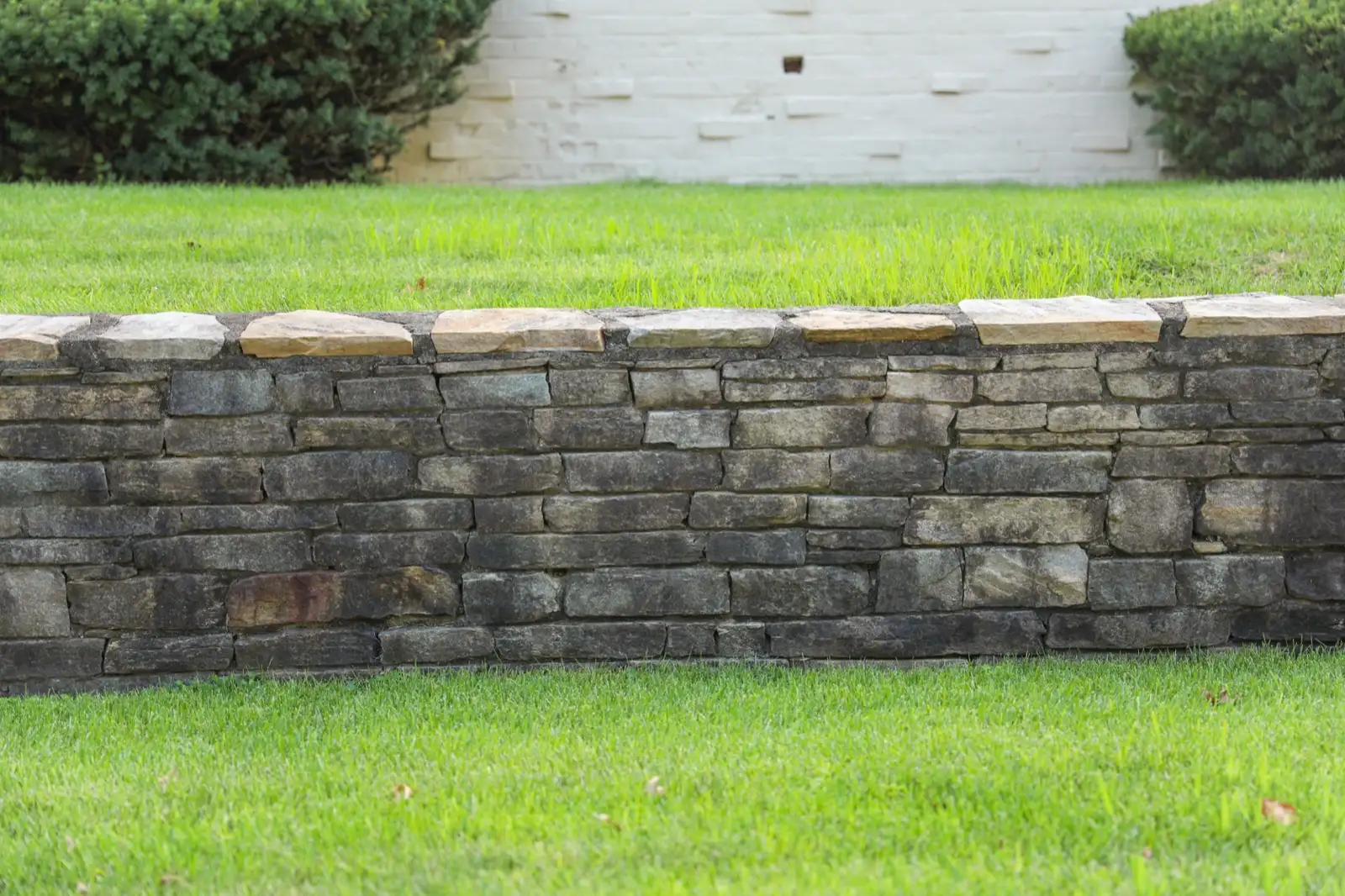
- Properly built timber wall, one builder's 1991 figure
- About 25 years
- Surface-dipped pine ties, same builder
- 6 or 7 years
- Typical removal rate
- $10 to $20 per sq ft
- Typical hauling and disposal
- $20 to $30 per sq ft more
Railroad tie retaining wall replacement in Meridian: block, boulder, concrete or timber
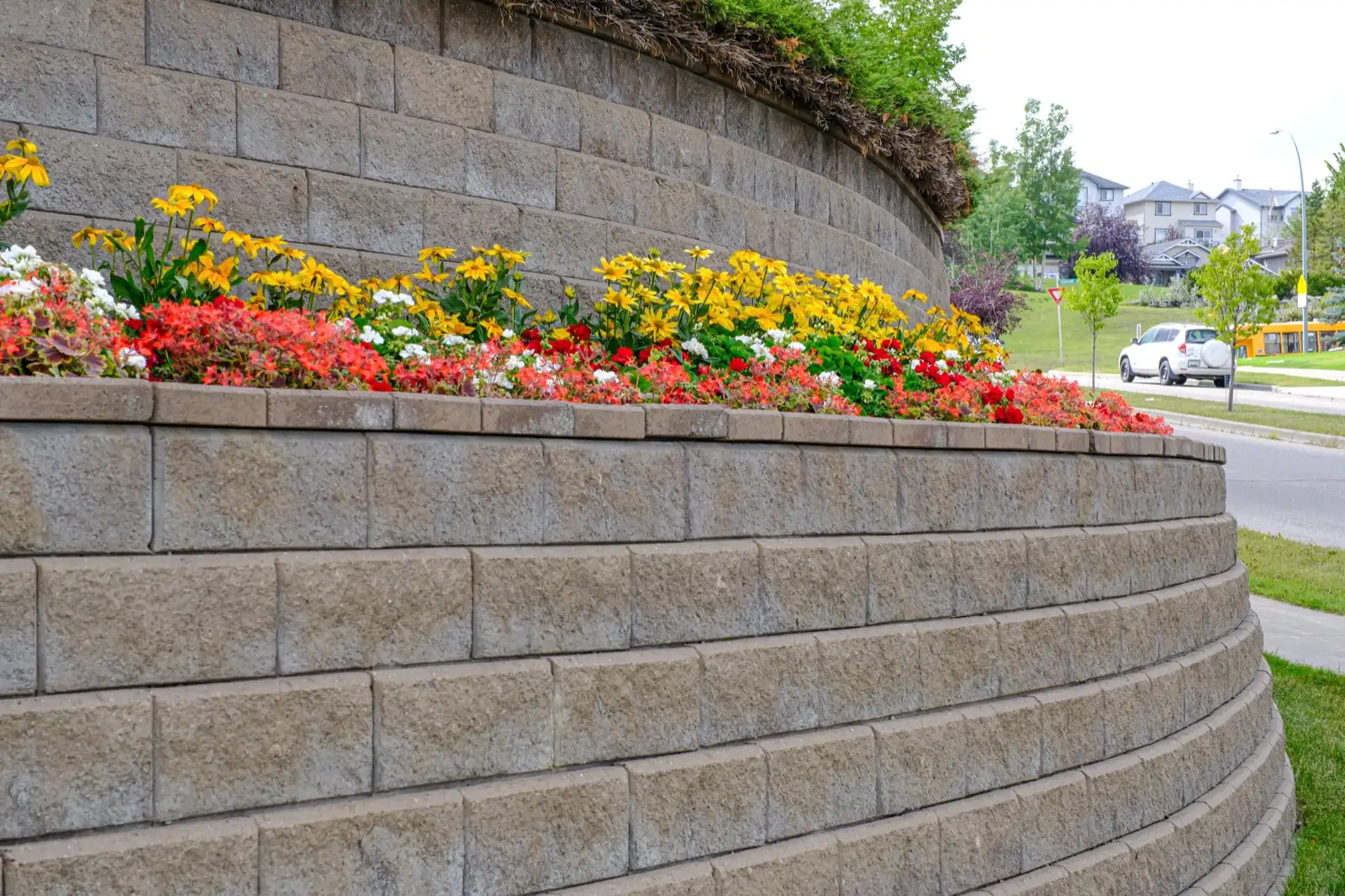
Replace a railroad tie wall with block
A segmental block face goes in where the ties came out, with the tear-out priced as its own line. A block retaining wall 40 feet long and 3 feet high works out to $1,800 to $4,200 at the typical national range.
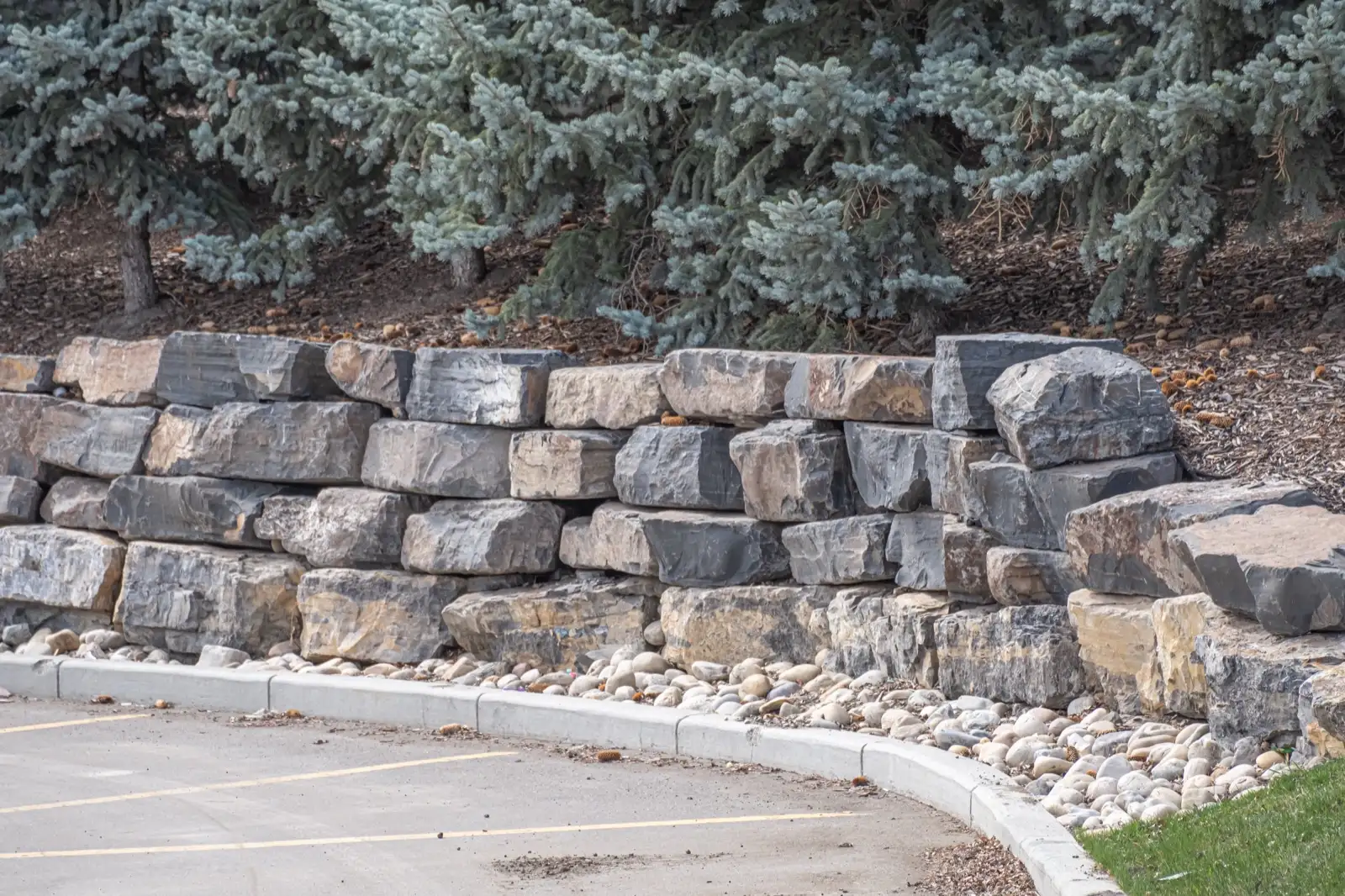
Replace a timber wall with boulders or stone
Rock suits a slope a machine can reach. Stone on that same wall works out to $2,400 to $10,800, the widest spread of any wall type, so read boulder retaining walls before comparing bids.
Replace a timber wall with concrete, or with new timber
Poured concrete retaining walls come to $2,400 to $4,800 on the 40 by 3 foot wall and new timber to $1,560 to $4,200.
Is the wall block or concrete, not timber? Leaning and cracked walls of other materials are on the retaining wall repair page.
Ready to plan your railroad tie wall replacement?
A short call with the wall size and a couple of photos is the best start.
Railroad tie wall replacement cost: the removal and the new wall
A replacement carries two prices, the tear-out and the new wall, and both follow the area of the wall face. Every rate below is a typical national range per square foot of face. The right-hand column applies each one to a single wall of 120 square feet: 40 feet long, 3 feet high.
| Line | Typical rate | 40 ft by 3 ft wall |
|---|---|---|
| Removing the old wall, with hauling and disposal | $10 to $20, plus $20 to $30 | $3,600 to $6,000. |
| New segmental block | $15 to $35 | $1,800 to $4,200. |
| New poured concrete | $20 to $40 | $2,400 to $4,800. |
| New boulder or natural stone | $20 to $90 | $2,400 to $10,800. |
| New timber | $13 to $35 | $1,560 to $4,200. |
| New railroad ties | $18 to $25 | $2,160 to $3,000. |
National cost guide ranges: removal from January 2025, new walls from October 2026. Rates move, and they depend on the wall and how you reach it.
Read the first row again. At these rates, taking the old ties out costs more than putting the same wall back in block, low end against low end and high against high. One lump sum hides which half you’re paying for.
None of this is a quote or an estimate for your wall. The rates are general ranges, and a tie wall’s price moves with its length and height, how the ties are anchored into the bank, where the treated wood goes, machine access and the material chosen for the new wall. Other wall sizes are worked through on the retaining wall cost page. Send us the measurements and photos of the rot, and we’ll help you find a contractor to price the replacement.
Call (208) 445-1999 to talk it throughor request a quote online
How long does railroad tie wall replacement take?
The utility locate comes first. Idaho’s dig law requires notice to the one-number locating service at least 2 and not more than 10 business days before excavation. Tear-out slipping? If digging hasn’t started within three weeks of the notice, the ticket has to be renewed. The state’s Damage Prevention Board also says digging needed within 24 inches of a marked line should be done by hand, with extreme care.
For the new wall, small block walls of about 60 to 160 square feet of face commonly take 2 to 4 days to build. That covers the new wall only, and times vary, so ask for the schedule in writing.
Pulling the old ties is the other half. Ask each bidder for tear-out days and build days as two separate numbers.
How long does a railroad tie retaining wall last?
About 25 years, properly built. That figure is one builder’s, from a 1991 trade journal article, and the same builder gives surface-dipped pine ties only six or seven years.
Compare that with block. One large-block maker claims a life of 75 years or more from a properly installed wall. It’s a manufacturer’s claim, not an independent test. If your ties went in when the house was built, the house’s age tells you how close the wall is to that 25 year mark.
Have a question before you decide?
Call and talk it through. Asking costs nothing.
Taking out an old railroad tie wall: removal, hauling and disposal
There’s more to a tie wall underground than you see from the lawn. Here’s the order the tear-out goes in.
- Utility marks down first The notice described above goes in before any soil is moved.
- Anchors found from the face A commercial inspectors’ association says a change from horizontal grain to exposed end grain shows where a deadman or tieback is.
- Soil dug out behind the wall By the 1991 builder’s account, timber walls need T-shaped tiebacks about 3 feet into the bank on every course. A building-inspection reference says replacing a rotted wall may mean excavating the retained soil to install new anchors.
- Ties pulled and loaded This is the $10 to $20 per square foot line. Hauling and disposal is the $20 to $30 on top.
- Treated wood disposed of, never burned The EPA says homeowners can usually dispose of creosote-treated wood in ordinary trash, subject to state and local rules, and that it must not be burned in a residential setting. Idaho’s environmental agency lists treated wood among construction materials that may not be open-burned.
Good to know Treated wood may not be open-burned in Idaho, so the ties have to go somewhere. Ask each bidder where the ties are going and what that costs.
Is a railroad tie retaining wall worth repairing?
Sometimes. It depends on what you find.
| What you find | What it tells you | What to do |
|---|---|---|
| Rot at the cut ends of ties | Rot in wood walls commonly starts there. | Photograph the cut ends as well as the face. |
| Mushrooms growing on the wood | More rot than is visible. | Price replacement alongside any patch. |
| Too few anchors for the face | Timber walls usually need at least one deadman per 16 square feet of exposed face, by university extension guidance. | Ask how the wall is tied back before paying for a patch. |
| Sound timber, water held behind it | A university extension page says most retaining walls, of any material, fail from water or soil moisture building up behind them. | A drainage retrofit is published nationally at $60 to $70 per linear foot. |
| One damaged stretch, the rest firm | Typical repairs run $400 to $1,065 by a 2026 national cost guide. | A repair may be the cheaper answer. |
Have photos of the cut ends ready when you call.
What a railroad tie wall replacement quote should include
- Removal as its own line Priced per square foot of face, apart from the new wall.
- Hauling and disposal A second line, with where the ties go.
- Tiebacks and deadmen Whether the timber buried in the bank comes out or stays.
- Base and drain rock for the new wall For block, the industry association calls for a leveling pad at least 6 inches thick and at least 12 inches of gravel fill behind the units.
- Registration number Idaho law requires contractor registration for any job over $2,000 in labor and materials, and a registered contractor must show the number on contracts.
Railroad tie wall replacement questions
When should I replace my railroad tie retaining wall?
Go by the signs: rot at the cut ends, and mushrooms, which mean more rot than you can see. Then look at the wall’s age. Past 25 years it has outlived one builder’s published figure for a properly built timber wall.
Are railroad ties good for retaining walls?
On price they hold up: $18 to $25 per square foot of face, by typical 2026 national figures. The catch is the treatment and the short life of dipped pine, six or seven years by one builder’s account. The EPA says creosote products are not available to homeowners, and that reusing creosote-treated ties as landscape timbers is not regulated under pesticide law.
Can I replace a railroad tie wall in sections?
Maybe, but ask before you count on it. Removal is published per square foot of face, so ask whether one section can be priced that way. If the wall went up in one go, the ties you leave are as old as the ones you pull.
Is timber cheaper than block over time?
Not clearly. Up front the prices overlap: on the 40 by 3 foot wall, new timber works out to $1,560 to $4,200 and block to $1,800 to $4,200. The life figures are where they part: a builder gives timber about 25 years and a large-block maker claims 75 or more. Neither is an independent test.
Don't see your question? Call (208) 445-1999.
Sources and review date
Reviewed October 2026. Sources: national cost guides (January 2025 and October 2026); EPA creosote guidance and Idaho's environmental agency on open burning; Idaho dig law, Damage Prevention Board and contractor registration rules; a 1991 trade journal article, university extension, building-inspection and inspectors' association references on timber walls; block industry association and block manufacturer guidance; contractor-published build times.